Gym Flooring Cost in Dubai: Prices, Types, Thickness & Installation Guide
If you are planning a gym in Dubai, one of the first questions you will probably ask is:
How much does gym flooring cost in Dubai?
The answer depends on several factors including the material, thickness, flooring format, total area, installation requirements and type of gym.
There is no single price for every gym flooring project.
A small home gym and a large commercial fitness centre can have completely different flooring requirements.
This guide explains the major factors that affect gym flooring cost in Dubai so you can plan your project more accurately.
How Much Does Gym Flooring Cost in Dubai?
Gym flooring prices can vary significantly depending on the product and specification.
Some Dubai flooring suppliers currently advertise indicative ranges from approximately AED 40 to AED 150 per square metre, while premium or specialized systems can cost more depending on thickness, material and installation.
These figures should be treated as market indications rather than a fixed quotation because every project is different.
Your final price can depend on:
- Flooring material
- Thickness
- Square metre area
- Rubber quality
- Flooring format
- Custom colours
- Installation
- Floor preparation
- Delivery
- Project complexity
The best way to get an accurate price is to calculate your floor area and specify the type of training taking place in each zone.
What Affects Gym Flooring Price?
1. Flooring Material
Different materials have different costs.
Common options include:
- Rubber flooring
- Rubber tiles
- Rubber rolls
- EPDM flooring
- Vinyl flooring
- Sports flooring
- Foam flooring
- Artificial turf
- Specialized performance flooring
The material should be selected based on the application rather than price alone.
2. Flooring Thickness
Thickness is one of the most important factors affecting gym flooring cost.
A thin flooring product may be suitable for certain light-use areas, while heavy strength-training zones can require substantially thicker flooring.
For example, free-weight areas generally need more protection than reception areas.
The correct thickness depends on:
- Equipment
- Weight loads
- Training type
- Impact
- Floor construction
- Usage frequency
Modern gym design guidance increasingly recommends choosing flooring thickness by zone rather than using one thickness across the entire facility.
3. Total Area
A 50-square-metre home gym and a 1,000-square-metre commercial gym are completely different projects.
Large projects may require:
- More material
- More transportation
- More installation labour
- More floor preparation
- More complex planning
However, larger projects may also have different supplier pricing structures.
4. Rubber Rolls vs Rubber Tiles
The flooring format can also affect project cost.
Rubber Rolls
Rubber rolls can be useful for large areas because they can provide broad continuous coverage.
They are commonly considered for:
- Commercial gyms
- Weight rooms
- Large fitness centres
- Functional training areas
Rubber Tiles
Rubber tiles are modular and can be useful when individual sections may need replacement.
They can work well for:
- Home gyms
- Small studios
- Commercial training zones
- Modular layouts
The right choice depends on the size and purpose of the gym.
5. Installation Cost
Gym flooring is not always a simple DIY product.
Installation can involve:
- Floor measurement
- Subfloor inspection
- Surface preparation
- Cutting
- Alignment
- Joint finishing
- Edge finishing
- Adhesive installation where required
Professional installation can increase the initial project cost but may provide a cleaner and more durable finished result.
6. Floor Preparation
If the existing concrete floor is uneven, damaged or unsuitable, preparation may be required before flooring installation.
Potential requirements can include:
- Cleaning
- Levelling
- Repairs
- Moisture assessment
- Surface preparation
These requirements should be assessed before the final quotation.
Gym Flooring Price by Application
Instead of asking only:
“What is the cheapest gym flooring?”
a better question is:
“What flooring is appropriate for my training area?”
Weightlifting Area
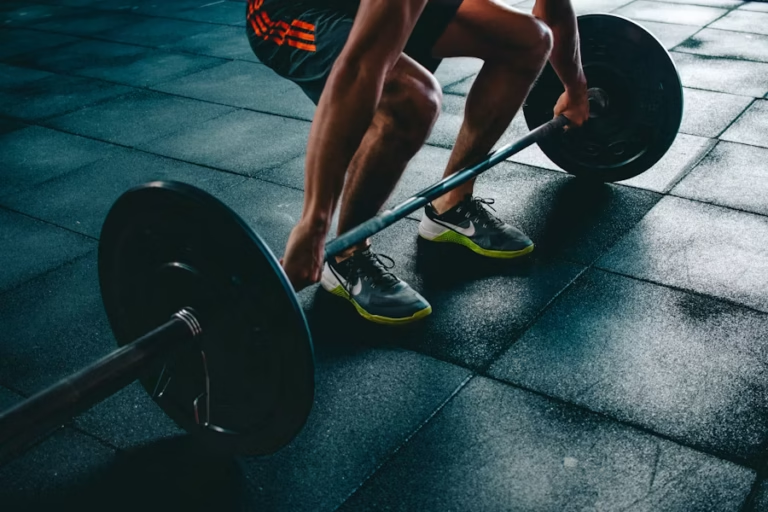
Heavy-duty rubber flooring is commonly considered for free-weight zones.
Functional Training Area
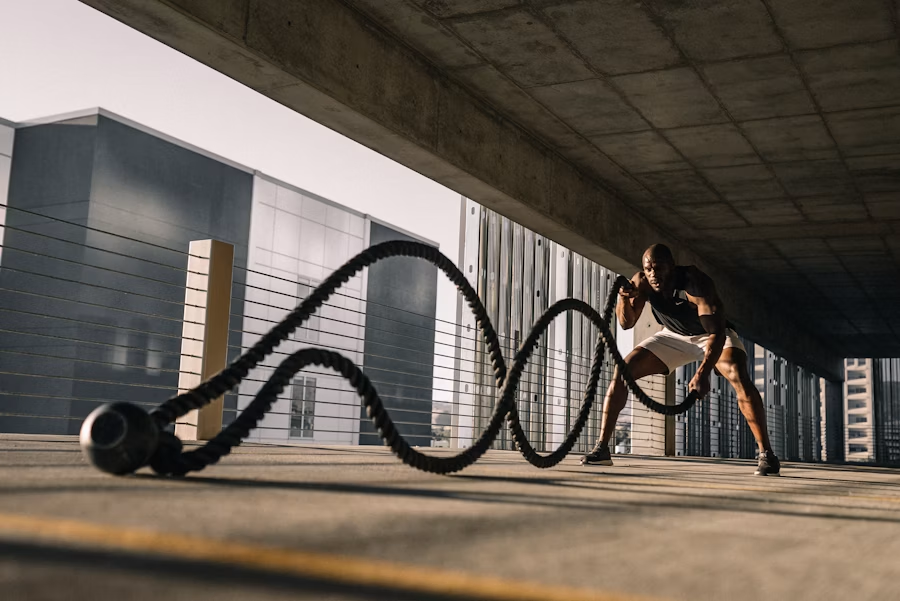
The flooring needs to handle dynamic movements, equipment and repeated use.
Cardio Area
The flooring should provide a stable surface around machines and be practical to clean.
Yoga & Stretching Area
Comfort and underfoot feel may be more important than extreme impact resistance.
Home Gym
Home gyms may prioritize easy installation, floor protection, noise control and appearance.
How to Calculate Gym Flooring Quantity
Calculating the required flooring area is relatively simple.
Measure:
Length × Width = Floor Area
For example:
A room measuring 10 metres × 8 metres has:
10 × 8 = 80 square metres
You should then consider additional material requirements for cutting, layout and installation.
For complicated spaces, professional measurement is recommended.
Is Cheap Gym Flooring Worth It?
The cheapest product is not always the cheapest solution in the long term.
Low-cost flooring can become expensive if it:
- Wears quickly
- Moves during use
- Has poor joints
- Cannot handle heavy equipment
- Requires frequent replacement
- Does not protect the underlying floor
Commercial gyms operate for many hours every day.
For this reason, durability should be considered alongside the initial purchase price.
How to Reduce Gym Flooring Costs
There are several ways to control your budget without compromising the important areas.
Use Different Flooring by Zone
You do not necessarily need the thickest flooring everywhere.
Use heavier-duty flooring where impact is highest and appropriate flooring elsewhere.
Measure the Area Correctly
Accurate measurements reduce unnecessary material waste.
Compare Complete Project Costs
Do not compare only the price per square metre.
Ask whether the quotation includes:
- Delivery
- Installation
- Floor preparation
- Cutting
- Finishing
- Warranty
Choose the Right Material
A flooring system should match the actual use of the gym.
Gym Flooring for Commercial Gyms
Commercial gyms typically need flooring capable of handling:
- Heavy traffic
- Free weights
- Gym machines
- Repeated workouts
- Cleaning
- Equipment movement
- Long operating hours
The flooring specification should therefore be based on the actual gym layout.
A professional flooring consultation can help identify the right solution for each zone.
Gym Flooring for Home Gyms
Home gyms usually have different requirements.
The homeowner may be more concerned with:
- Noise
- Floor protection
- Appearance
- Installation
- Space
- Budget
For lighter-use home gyms, modular rubber tiles or mats may be practical options.
For heavy lifting, thicker rubber flooring may be more appropriate.
Questions to Ask Your Gym Flooring Supplier
Before ordering flooring, ask:
- What material is recommended for my gym?
- What thickness do you recommend?
- Is installation included?
- Does the existing floor need preparation?
- How long will installation take?
- Is the flooring suitable for heavy weights?
- What maintenance is required?
- What warranty is provided?
- Can I see samples?
- Can you measure the site?
These questions can help you compare quotations properly.
Get a Gym Flooring Quote in Dubai
Gym flooring should be viewed as an investment in the safety, performance and long-term usability of your fitness facility.
Whether you are opening a commercial gym, upgrading a fitness studio or building a home gym, the right flooring can make a significant difference.
At Casavera Home, we provide gym flooring solutions for different fitness environments across Dubai and the UAE.
Tell us:
- Your location
- Approximate floor area
- Type of gym
- Training activities
- Equipment being installed
Our team can then help you identify the appropriate flooring solution for your project.
Looking for gym flooring cost in Dubai? Contact us for a project-specific quotation.