Gym Setup in Dubai: Complete Guide to Building a Successful Fitness Facility
Opening a gym in Dubai is much more than buying fitness equipment and renting a space.
A successful gym requires careful planning across the layout, equipment, flooring, lighting, ventilation, changing rooms, branding, customer experience and daily operations.
If you are researching gym setup in Dubai, this guide explains the major areas you should consider before starting your fitness business.
Is Dubai a Good Location for a Gym Business?
Dubai has a highly competitive fitness market with large fitness chains, boutique studios, personal training facilities, hotel gyms and residential fitness centres.
This competition means a new gym needs a clear reason for customers to choose it.
Your advantage could be:
- Location
- Pricing
- Premium equipment
- Personal training
- Boutique experience
- Women-only fitness
- Functional training
- Cross-training
- Strength training
- Recovery and wellness
- Community
- Premium interior design
The goal is not simply to build another gym.
The goal is to create a fitness experience that has a clearly defined target customer.
Step 1: Define Your Gym Concept
Before choosing equipment, decide what type of gym you want to build.
Examples include:
Commercial Fitness Centre
A commercial gym can offer a broad range of equipment and services to a large membership base.
Boutique Fitness Studio
Boutique studios can focus on specific activities such as functional training, personal training, Pilates or group classes.
Personal Training Studio
A smaller space can be designed around one-to-one or small-group training.
Strength & Performance Gym
This type of facility can focus heavily on free weights, strength equipment and performance training.
Hotel or Residential Gym
Hotels and residential developments may require compact but versatile fitness spaces.
The flooring, equipment and layout should be planned around the concept.
Step 2: Choose the Right Gym Location
Location can have a major impact on gym performance.
Consider:
- Residential population
- Office population
- Parking
- Accessibility
- Visibility
- Competition
- Rent
- Nearby businesses
- Target customer
- Operating hours
A premium gym in a location that is difficult for customers to access may struggle despite having excellent equipment.
Step 3: Plan the Gym Layout
Gym layout should be planned before equipment is purchased.
A typical facility may include:
- Reception
- Cardio area
- Strength area
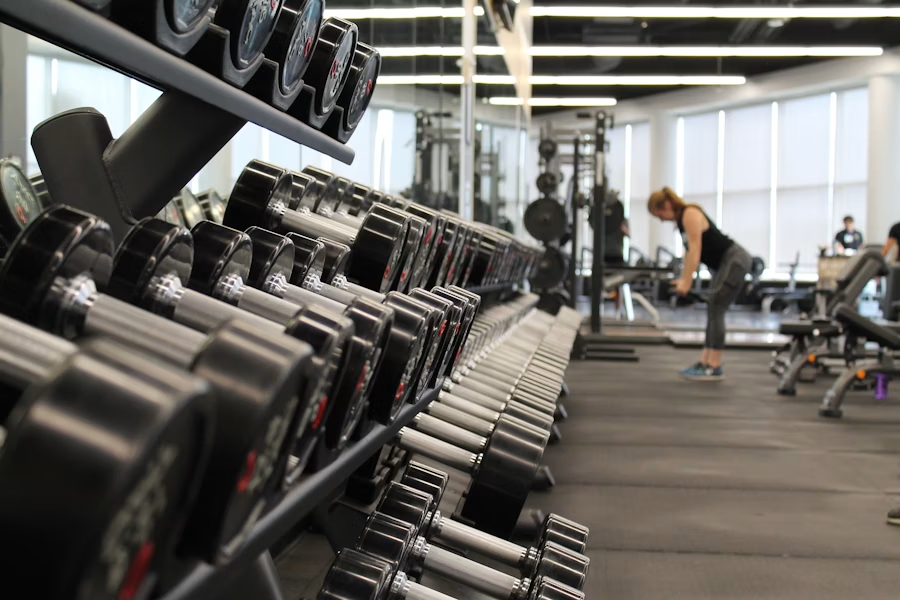
- Free-weight zone
- Functional training zone
- Stretching area
- Group exercise area
- Changing rooms
- Storage
- Staff area
The layout should allow customers to move comfortably through the facility.
Equipment placement should also be considered when selecting the flooring.
Step 4: Choose Gym Equipment
Gym equipment is one of the biggest investments in a new fitness facility.
Depending on the concept, equipment may include:
- Treadmills
- Exercise bikes
- Cross trainers
- Rowing machines
- Cable machines
- Smith machines
- Power racks
- Benches
- Dumbbells
- Barbells
- Weight plates
- Functional training equipment
Do not purchase equipment simply because it looks impressive.
Choose equipment according to your target customer and business model.
Step 5: Select the Right Gym Flooring
Gym flooring is often overlooked during the early stages of a gym project.
That can be a mistake.
The flooring needs to support the equipment and activities taking place in each zone.
For example:
Weight area: Heavy-duty rubber flooring
Functional training: Durable impact-resistant flooring
Cardio area: Stable, easy-to-maintain flooring
Yoga/stretching: More comfortable flooring
Walkways: Durable flooring suitable for high foot traffic
Modern gym design increasingly uses zoned flooring rather than one identical material throughout the entire facility.
This can improve both functionality and visual design.
Step 6: Consider Noise and Vibration
Noise can become an important issue, especially when a gym is located inside a mixed-use building, hotel, apartment development or commercial property.
Common sources include:
- Dropped weights
- Treadmills
- Weight machines
- Heavy equipment
- Group exercise
- Functional training
The flooring system should therefore be considered as part of the overall acoustic strategy.
For heavy lifting zones, appropriate rubber flooring can help manage impact and protect the underlying floor.
Step 7: Create a Professional Gym Interior
Customers form an impression of a gym as soon as they enter.
Important design elements include:
- Lighting
- Flooring
- Mirrors
- Wall finishes
- Branding
- Equipment arrangement
- Reception design
- Signage
- Colour scheme
- Cleanliness
The goal is to create an environment where customers feel comfortable and motivated to return.
Step 8: Create Different Training Zones
Instead of putting every piece of equipment randomly around the gym, divide the facility into logical zones.
A commercial gym could include:
Strength Zone
Racks, benches, barbells and free weights.
Cardio Zone
Treadmills, bikes and cross trainers.
Functional Zone
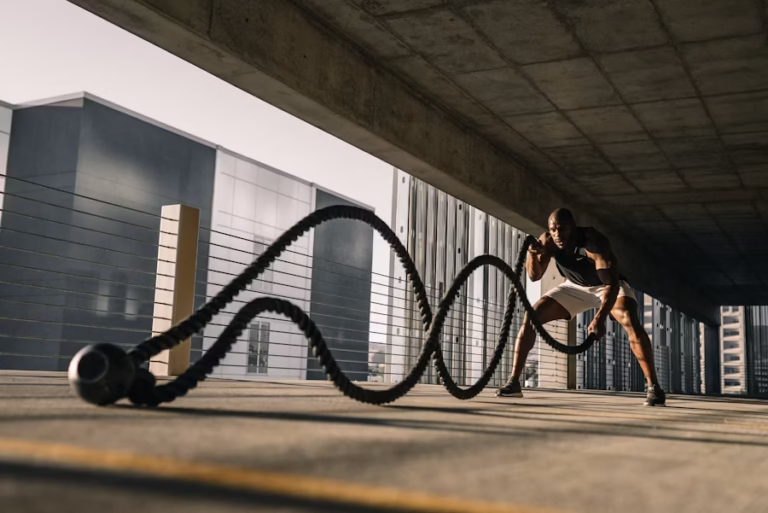
Sleds, kettlebells, battle ropes and functional equipment.
Mobility Zone
Stretching, warm-up and recovery.
Group Training Zone
Open space for classes and instructor-led training.
Each zone can have different flooring requirements.
Step 9: Plan the Customer Experience
Modern gym customers are not only buying access to equipment.
They are buying an experience.
Consider:
- Easy check-in
- Clean facilities
- Comfortable changing rooms
- Good lighting
- Quality equipment
- Professional trainers
- Music
- Temperature control
- Hygiene
- Community
- Convenient operating hours
A gym with excellent equipment but poor customer experience can struggle to retain members.
Step 10: Think About Gym Marketing Before Opening
Do not wait until the gym opens to start marketing.
Build interest before launch.
Potential marketing channels include:
- Google Business Profile
- Google Search
- TikTok
- Local SEO
- Influencer marketing
- Referral campaigns
- Pre-launch memberships
Create content showing:
- Construction progress
- Equipment arriving
- Flooring installation
- Interior design
- Trainer introductions
- Gym zones
- Launch offers
This allows potential customers to follow the development of the gym.
How Much Does It Cost to Set Up a Gym in Dubai?
There is no universal gym setup cost.
The investment depends on:
- Location
- Gym size
- Rent
- Equipment
- Interior fit-out
- Flooring
- Lighting
- HVAC
- Changing rooms
- Reception
- Branding
- Technology
- Licensing
- Staff
- Marketing
A small personal training studio will have very different requirements from a large commercial fitness centre.
For this reason, gym owners should create a detailed project budget before signing major contracts.
Why Gym Flooring Should Be Planned Early
One common mistake is treating flooring as the final decoration.
Gym flooring should be considered during the planning stage because it affects:
- Equipment placement
- Training zones
- Floor protection
- Noise
- Maintenance
- Appearance
- Installation schedule
Planning the flooring together with the gym layout can prevent expensive changes later.
Building a Gym in Dubai? Start With the Right Plan
A successful gym is built around the customer, not simply around equipment.
From the location and business concept to flooring, equipment, layout and marketing, every part of the project should support the overall customer experience.
If you are planning a gym setup in Dubai, professional flooring should be part of your initial project planning.
Casavera Home provides gym flooring solutions for commercial gyms, fitness studios, home gyms and sports facilities in Dubai and the UAE.
Planning a new gym?
Speak to our team about your gym flooring requirements and project.